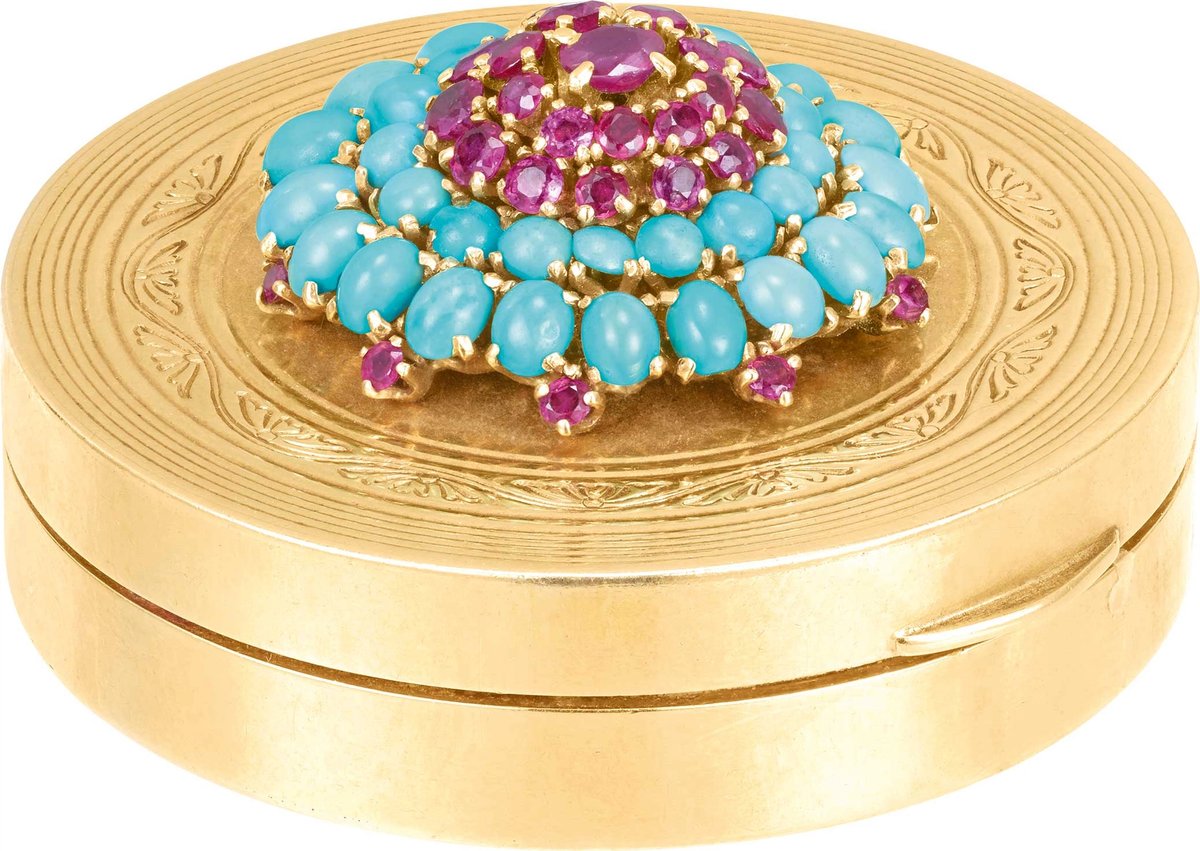
Van Cleef & Arpels cashes in on lucrative secondary market for vintage jewellery
The Art Newspaper
7 May 2026
The jewellery designer's Heritage Collection presents rare 20th-century creations.
Long before the present vogue for vintage jewellery took off, the manager of Van Cleef & Arpels’s flagship store on Fifth Avenue started to notice that clients were also buying on the secondary market. Wouldn’t it make better sense, he thought, if customers could source what Natacha Vassiltchikov, the jeweller’s international heritage retail director, calls “creations from our history” direct from the jeweller itself? The advantages were obvious. The buyer would benefit from a watertight promise of authenticity and ongoing aftercare, and the maison would get a cut of a fast-growing business. In 2024, for example, combined sales of Van Cleef jewels at Sotheby’s, Christie’s and Artcurial totalled more than €120m (including fees).
The result was its Heritage Collection, launched in 2007: an expertly curated selection of around 150 mostly exceptional creations made in the 20th century.
“It started small,” Vassiltchikov says, “with just a few pieces. It worked so well, we began to show it around the world. Now, we’re seeing more and more clients starting to explore the heritage offerings and fall in love with them.”
It is not, she stresses, simply a reselling service. Only pieces felt to be “still wearable today” will enter the ever-evolving collection after authentication. “Every Van Cleef piece ever made is engraved with a unique number,” Vassiltchikov explains, which can be checked against the archives. “This allows us to ensure that it’s never been modified and that all the original gemstones are still there.”
Condition is critical. “Pieces are cleaned. All the clasps and prongs are checked. But we don’t repolish because that removes a layer of metal and that can make the mount quite fragile,” Vassiltchikov says. “There might be tiny scratches but they are all part of the patina.”
Among the items currently on offer are a handful of 1960s transformable diamond necklaces with detachable pendants that double as clips, as well as a couple of highly engineered, supremely flexible “Ludo” bracelets of square links interspersed with diamonds (right), evocative of Art Deco.