The odd couple: Chanel and Pomellato play with asymmetry in jewellery
Wallpaper
16 Oct 2023
Two jewellery houses, Chanel and Pomellato, take a new turn, toying with asymmetry to create organically opulent pieces
In a bid to spotlight the rare gemstones that give high jewellery pieces their star appeal, the designer’s job can become something of an architectural pursuit. Whether a ring, bracelet or necklace, the intricate gold frameworks in which the weighty stones are set must be designed on varying levels to accommodate their volume, which gives this specialist field of jewellery design the baroque character that sets it far apart from everyday fine gold and silver pieces.
This year, however, two jewellery houses played with symmetry and white space to achieve a less voluminous, more contemporary look.
Chanel’s modernist feel
Patrice Leguéreau, director of Chanel’s Fine Jewellery Creation Studio, took inspiration from heritage fabric for the brand’s latest collection, Tweed de Chanel. ‘We wanted the jewellery to feel as if you are being draped with a piece of cloth, so the craftspeople in our workshops were tasked with reproducing its flexibility and fluidity using metal and precious stones. You can’t imagine the ingenuity they deployed to achieve that.’
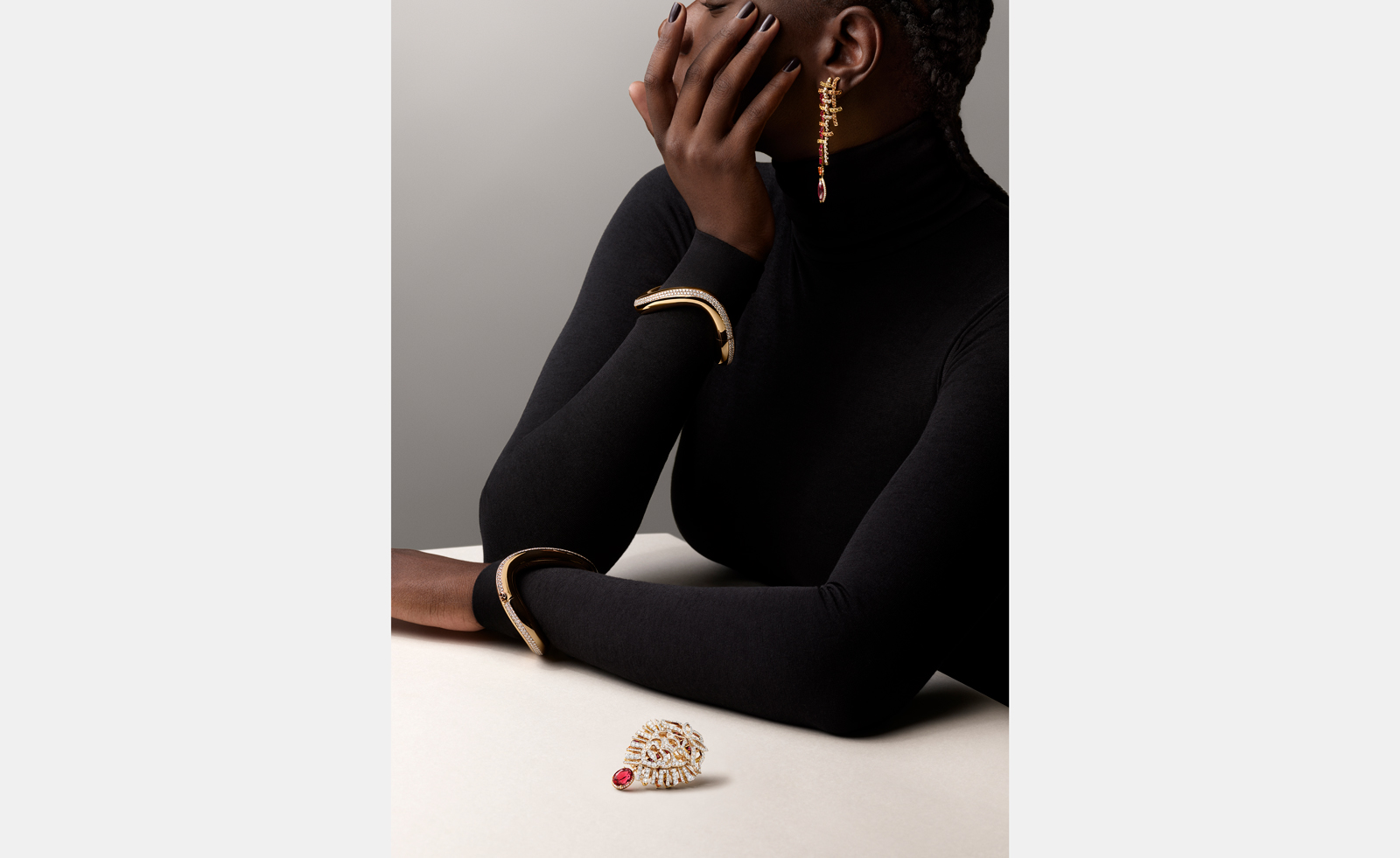
The ‘Tweed Lion’ suite has a distinctly modernist feel – the modular brooch can also be worn on a chain, while the earrings are asymmetrical. The right earring is a smaller, airier, less jewelled version of the brooch. And while the long, dangling left earring could easily have been a straight, criss-cross graphic, its reflection of the natural yarn adds a mischievous tension.
Pomellato’s pop-art sensibility
Meanwhile, Vincenzo Castaldo, creative director of Milanese brand Pomellato, took a suitably pop art approach to the house’s heritage codes with the ‘Dama’ bracelets, a standout design from its ‘Ode to Milan’ collection. The swirls of gold replicate the sensual round-flat form of Pomellato’s classic gourmette link, created in the late 1960s by the brand’s founder Pino Rabolini, a goldsmith inspired by the casual, ready-to-wear pop art sensibility of Pierre Cardin.